The Quinceañera Dress
Estefania Gomez
DES 141: Cultural Studies of Fashion
Pachia Lucy Vang
10 June 2025
Introduction
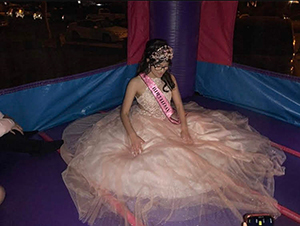
The quinceañera dress, with its sparkles and puffiness, is more than just a pretty dress. The quinceañera dress is a powerful symbol worn by Latina girls during a coming-of-age celebration that marks their fifteenth birthday and their transition from childhood to womanhood. While the dress is the centerpiece of this celebration, it also tells a story of culture and identity. Specifically in Latino culture. This essay explores the quinceañera dress as a representation of the cultural significance of Latina women and the pressure that comes along with it, especially when it comes to gender and national identity. By using the idea of ambivalence, non-Latino individuals are able to better understand how the dress creates both joy and tension throughout the ceremony.
Gender Performance and Femininity
The quinceañera dress is a clear performance of gender, specifically in traditional femininity. The dress is usually styled as a princess ball gown with glitter, lace, and tulle. Usually, the dress will be pink, but nowadays girls have more freedom to choose the color of the dress. These design choices communicate a very specific idea of femininity. According to gender theory, this is a performance. A visual and physical way of showing what is mature and feminine (Kaiser 56). Girls usually wear colors and dresses that fit the stereotypical standard of a gentle and ladylike girl (Gender Binaries). Although it’s not explicit, the dress clearly sets expectations of how a lady should be graceful, delicate, and beautiful. However, it’s not only about following gender norms. Most girls feel most beautiful and even proud to be wearing the dress. Wearing the quinceañera dress can be an act of empowerment and confidence. But to other girls, it may even be uncomfortable. The pressure to act a certain way on the day of the event makes girls feel out of place and even fake. Fake in the sense that some girls don’t dress as girly on their day-to-day basis or don’t feel comfortable wearing such a ‘ladylike’ piece. Although the quinceañera ceremony is a choice, many girls are pressured to have a quinceañera. Furthermore, the ceremony itself includes a set of events that represent the transition from childhood to womanhood. For example, it’s common for girls to be wearing sneakers at the beginning of the ceremony and later have their father take off their shoes and switch them into high heels. This is a clear identifier of the stereotypical feminine expectation of a woman.
National Identity and Cultural Heritage
National identity is also a vital part of the meaning behind the quinceañera dress. For Latino culture, the dress is more than just a fashion statement and a pretty dress. It’s a way to represent and honor cultural heritage and demonstrate pride. Some quinceañera dresses include Mexican embroidery, La Virgin de Guadalupe, and even Mexican flags. These designs allow the girls to have a connection to their roots and show their identity as a Latina woman. This ceremony is especially extravagant in the US as it shows the pride of our origins. As mentioned in lecture, identity is shaped by many overlapping influences. Especially for young girls growing up in two different cultures, the quinceañera dress expresses their Latino background. However, even this expression of national pride can reflect complicated feelings. Some families feel pressured to follow the traditional quinceañera, while others like to update the celebration to better reflect the growth in generations. Some girls want dresses that blend more with modern culture and choose colors that aren’t so traditional, like black and red. Others might even skip the religious ceremony and change things to match their identity. This overall demonstrates how national identity isn’t fixed but instead, flexible. Additionally, the dress may be inspired by other cultures and media, such as Disney princesses. This clearly demonstrates the growth in generations and the more liberal approach to a quinceañera. However, it leads to questions such as Is the celebration becoming too commercial? Is it truly about culture or just money and appearance? These questions lead to mixed feelings for both the girls and the families.
Ambivalence and Emotional Complexity
Ambivalence is the experience of feeling two or more things at the same time. It’s vital to how people experience the quinceañera dress. Some girls might feel happy to be the center of attention wearing a beautiful dress, while others might also feel overwhelmed by the expectations that will follow during and after the ceremony. Some girls feel honored to be part of the tradition, while others might feel pressured and uncomfortable with how out of the ordinary and feminine the dress is supposed to be.
Ambivalence is common in fashion because people are drawn to it but might also feel unsure about what it may represent (Davis 24).
This statement overall connects to this theme of quinceañera dresses. Girls may want to express themselves in a more personal way, but still want to celebrate with their families. Susana Peña explains that in Latino culture, this ceremony often makes girls feel like they have to act a certain way to fit in, even if that’s not their true self (Peña). As mentioned, it’s common for a quinceañera dress to be pink and girly. Sometimes there are girls who don’t want to express themselves in that manner and want to explore other options, such as colors, silhouettes, etc. Furthermore, money adds to this stress. Quinceañera dresses and parties can be extremely expensive, sometimes costing thousands of dollars. For the lower-class and working-class families, this can be a struggle and a big financial burden. Some families even go into debt, while others get help from other relatives who are referred to as ‘padrino/a’. Girls who can’t afford an extravagant party often feel left out, especially if their friends have bigger parties or are invited. As discussed in lecture, people have to make choices based on what is available to them in the market and what their families expect. Another way to understand the feelings around the quinceañera dress is by using the circuit of style-fashion-dress. Which includes how the dress is made, remembered, sold, and chosen (Kaiser 8). These dresses are often made in bridal shops and factories by Latino workers. Some families even go as far as making the dress by hand. The sentiment behind a handmade quinceañera dress increases as it's usually made by a close family member, such as a grandma. Families buy them based on what they are able to afford and what they like. Social media can also heavily influence decisions, as these outside opinions set the standard. Every step of this process includes both positive and negative emotions that ultimately tie to ambivalence.
Conclusion
Even with all these contradictions, the quinceañera dress is still a powerful and important part of many girls’ teenage years. It allows them to celebrate who they are and where they come from. The dress becomes a piece of memories, filled with memories of joy, pride, confidence, stress, and even grief of leaving behind a childhood and transitioning to womanhood. In conclusion, the quinceañera dress shows us how fashion is more than just clothing but instead a piece of expression. Especially in matters of gender, national identity, and even complex emotions. By examining the dress through these concepts, we can gain insight into how girls experience both pressure and celebration. The quinceañera dress is both a site of joy and tension. It’s a vital part of the Latino culture and an equally important event in a girl's life.